

The Role of AI in MS Healthcare
By Tom Garry
Edited by Susan Wells Courtney
Reviewed by Barry A. Hendin, MD
Introduction
Each day brings new reports on the promise and perils of artificial intelligence (AI) – milestones achieved, concerns uncovered, rosy predictions, and apocalyptic warnings.
While elected officials, tech moguls, and media commentators wrestle with the broad implications of AI, from the economic to the existential, multiple sclerosis researchers are pursuing more-focused questions, examining whether artificial intelligence can:
- identify people likely to develop MS years before their first demyelinating event
- improve the speed and accuracy of diagnosis
- better predict the course of each person’s MS and how each will respond to specific disease-modifying therapies (DMTs)
- enhance how people with MS move and communicate
- speed the development of new therapies
It’s what Michael G. Dwyer, PhD, calls “narrow AI.” A neuroimaging specialist, Dr. Dwyer uses that term to distinguish how the work that he and other MS researchers are doing, differs from the endeavors, often the subject of debate, of companies like OpenAI and Anthropic.
Dr. Dwyer serves as director of the Neuroinformatics Development Lab at the Buffalo Neuroimaging Analysis Center of Buffalo General Medical Center in upstate New York. He explains that teams around the world are employing AI tools in virtually all aspects of MS care.
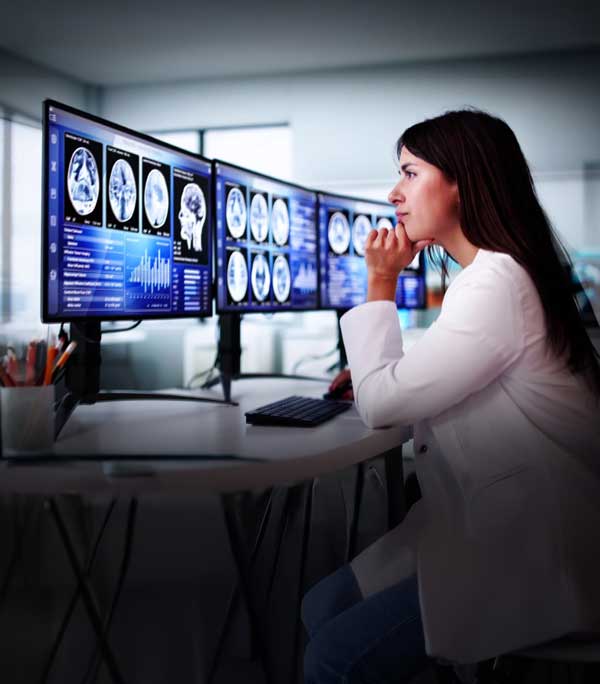
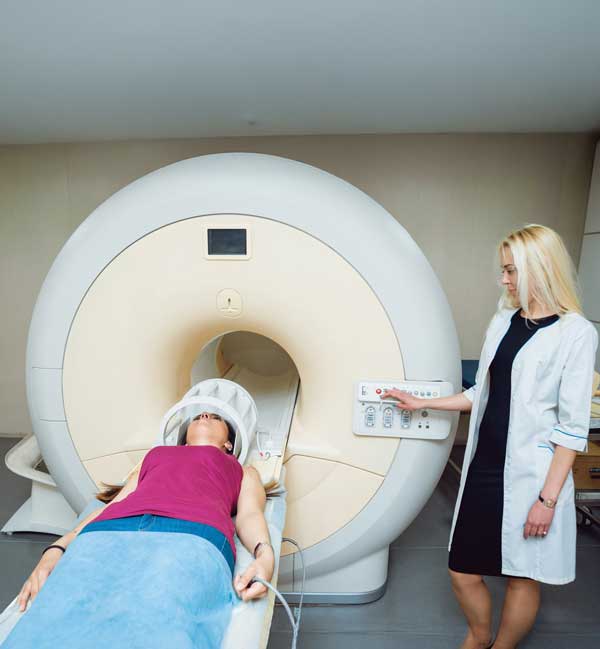
In some cases, according to Dr. Dwyer, artificial intelligence is upgrading existing capabilities, such as increasing the prognostic information that a sophisticated software program can derive from analyzing magnetic resonance imaging (MRI) scans. He adds that in other instances, AI is blazing a trail in uncharted territory.
“Researchers and clinicians have been slowly employing early AI methods over the last decade or so,” states Dr. Dwyer. “For example, MRI scanner manufacturers have been including artificial intelligence tools to speed up scan times or improve the quality of scans, but there’s been a turning point in the last five years where the capabilities have started improving exponentially. We’re now able to employ AI approaches much more quickly because there’s a large ecosystem of AI tools across medicine and society.”
As part of the next phase of MSAA’s MRI Access Program, we are partnering with icometrix, a global leader in AI-driven neuroimaging, to conduct advanced AIpowered MRI analysis on the MRI scans performed. This research initiative is designed to generate standardized, deidentified data that will help researchers better understand patterns of healthcare access, care navigation, patient engagement, and financial burden among people living with MS.
This article will examine the many ways, both incremental and incredible, that AI already is reshaping multiple sclerosis care and may affect everyday life with MS in the years ahead.
Persistent Challenges in MS Diagnosis and Treatment
There’s no such thing as an “easy” disease, but that doesn’t mean some aren’t harder to manage than others. And, says MSAA’s Chief Medical Officer Barry Hendin, MD, multiple sclerosis falls toward the far end of the difficulty spectrum.
“The challenges begin with diagnosis and extend through predicting the likely course of a person’s MS, to choosing initial and subsequent treatments, and deciding whether and when to stop therapy,” says Dr. Hendin, a neurologist and MS specialist in Phoenix, Arizona. He adds that while recent years have seen considerable advances on all of those fronts, further progress is needed – progress that AI may help deliver.
Starting with the first challenge he cited – diagnosis – Dr. Hendin explains that the timely and accurate identification of multiple sclerosis can be complicated because many MS symptoms could be attributable to numerous neurological or musculoskeletal issues, as well as other conditions. Is a woman’s fatigue the result of anemia, a persistent virus, depression, MS, or any one of a dozen other causes? Is a pinched spinal nerve, MS, or some other issue causing a man’s left foot to drag?
The difficulty in distinguishing MS from other conditions has led to reported rates of misdiagnosis ranging from 5% to 18%.1 In one study involving 428 people with multiple sclerosis, 40% reported misdiagnosis of symptoms that eventually were attributed to MS.2 Dr. Hendin notes that updates in 2024 to the McDonald Criteria employed to identify MS have improved matters. In fact, in a study that compared the performance of the 2024 criteria to the prior version, issued in 2017, the newer guidelines reduced the median time from symptom onset to diagnosis from 84 days to 40 days and correctly identified 93% of people who actually had MS.3
“These are noteworthy gains, but they still leave room for improvement,” says Dr. Hendin, explaining that a particularly intriguing possibility is that AI’s datacrunching prowess may enable it to identify people at high risk for MS years before they have a presenting symptom such as optic neuritis and numbness in a limb. Such a capability would, in turn, raise the question of whether pre-symptom intervention could delay, modulate, or even prevent MS onset.
Turning to treatment, Dr. Hendin says that one of the main challenges clinicians face today can be considered a “good problem” to have. He explains, “Thirty years ago, we had three approved disease-modifying therapies, or DMTs, two of which had essentially the same means of working. Now, we have more than 25 approved brands of DMTs for relapsing forms of MS. Those medications work in a variety of ways, range from moderate to high efficacy, and have important differences in terms of the nature and frequency of their side effects.”
As a result, Dr. Hendin adds, clinicians and newly diagnosed patients face a daunting task when they sit down to weigh the advantages and disadvantages of various treatments. He explains that physicians traditionally have been taught to “start low and go slow,” to try to find the least-potent dose of a medication that will adequately control a patient’s condition, and to move to more-powerful therapies only if needed.
The thinking behind this approach is that less potency will mean fewer side effects. However, he says, recent studies suggest that there is benefit in initiating treatment with high-efficacy DMTs, even allowing for the greater potential for adverse effects, because there may be a window of opportunity in the early stages of MS when introduction of these potent agents can silence inflammation, favorably impacting outcomes over the long-term.
Dr. Hendin’s hope is that by analyzing millions of data points on hundreds of thousands of people with MS, AI will provide insights on the likely course of each patient’s MS and each individual’s expected response to a particular therapy, allowing for truly individualized decision-making. Dr. Hendin adds that AI may also be of considerable help at the other end of the treatment journey, as clinicians and patients grapple with the question of whether, after several years without disease activity, it is safe to stop a DMT. “Again, the idea is that artificial intelligence would look at a whole host of patient characteristics and similar factors and offer a data-validated prediction of whether discontinuing treatment would lead to a relapse or disability progression,” he says.
Artificial intelligence is already providing Dr. Hendin with information crucial to the treatment plans he formulates for his patients. In this case, however, the information isn’t coming from analyzing a massive database. Rather, it is generated by an AI tool that acts as a silent listener in the exam room.
Dr. Hendin explains that several months ago, the academic medical center where he practices deployed AI “scribes” to take notes and generate summaries during patient visits. “I expected that the technology would provide a passable note that I would need to spend considerable time refining. Instead, I have been very pleasantly surprised by the quality of AI-generated reports.
“There is a level of judgment, if you will, that the technology exercises in screening out casual conversation and homing in on what matters, such as the patient’s history and workup findings. Of course, I still have to edit the report and add my conclusions, but the technology definitely has saved me time overall and, most importantly, enables me to be fully focused on the patient and to have a truly in-depth discussion with each individual.”
The ability of such AI tools to help clinicians reduce their administrative burdens and devote more attention to patient care is critical at a time when the United States is facing a shortfall of more than 21,000 neurologists and high burnout rates among physicians in the specialty.4,5
So, there are plenty of aspects of patient care where AI might be able to lend a helping hand. But what role is AI playing in those areas currently, and how might it drive future advances, not only in direct patient care but also in developing new therapies and making life better for people with MS? That’s what we’ll look at next.
AI and MS Diagnosis and Monitoring: Current Status and Future Directions
“I wonder if that was an early sign that I had MS.”
Many people newly diagnosed with multiple sclerosis will look back over past years and remember some unusual symptom or event that, in retrospect, might have been the first indication that they had a neurological condition. Not the episode of optic neuritis or loss of sensation in a limb that sent them to the doctor and led to the diagnosis, but some subtle sensation or problem that occurred five, 10, or even 15 years earlier.
It’s easy to dismiss such thoughts as to what psychologists term “recall bias” – a tendency to view past events inaccurately or to invest them with undue significance based on current knowledge. However, a recent study involving more than 12,000 people showed that as early as 15 years before diagnosis, people ultimately diagnosed with MS had patterns of seeking healthcare that differed significantly from those of people with similar demographic characteristics.6

Researchers drew on data from the government health system in British Columbia, Canada, to identify 2,038 people with multiple sclerosis. They then matched each of those people with up to five people of the same sex, birth year, and postal code who did not have MS. In comparing the two groups, they found that people in the MS cohort had more doctor’s visits for:
- ill-defined symptoms and mental health issues starting 14 to 15 years before onset of the symptoms that led to an MS diagnosis
- neurologic and vision issues eight to nine years before MS symptom onset
- musculoskeletal, sensory, and/or nervous system issues four to eight years before onset of MS symptoms
The study’s authors wrote that their findings “suggest that MS may begin much earlier than previously recognized” and indicated that there were “opportunities for earlier identification and intervention.”
In analyzing 25 years of data for 12,220 people, those researchers used two highly sophisticated software programs. However, neither program was AI-powered. So, if conventional computer software can identify tell-tale trends in healthcare utilization a decade or more before an MS diagnosis, how much more precision can artificial intelligence models bring to that task?
A great deal more, according to a team of investigators at the University of California, San Francisco (UCSF). They developed SPOKE, which they describe as a “knowledge graph,” or a structured database that presents information as a network of interconnected relationships and entities. SPOKE links information from more than 30 databases, allowing AI analysis of millions of pieces of information on symptoms, physician visits, treatments, patient demographics, and other key factors. In a study published in 2022, the SPOKE model predicted the disease status of 5,752 people three years before they were diagnosed with MS.7
Beyond predicting who may develop MS, AI is also playing an important role in determining who has developed MS. A recent analysis of 28 studies involving 4,350 people with either MS or a closely related condition, neuromyelitis optica (NMO), found that MRI-based AI models outperformed other neuroimaging modalities, particularly when it came to recognizing early-stage MS and NMO. Across the studies assessed, AI-powered imaging technologies correctly identified the presence of MS in 89% of cases and correctly ruled out the disease in 91% of cases.8
Recent updates to the McDonald Criteria for diagnosing MS provide additional impetus to tap into AI’s capabilities. Dr. Dwyer explains that the 2024 revisions to the criteria added two MRI findings – the central vein sign and paramagnetic rim lesions* – to the list of factors to be considered in diagnosing MS. “Those can be difficult markers to read clinically, so I think we’re going to see AI-based tools coming out that will help operationalize and standardize identification of those imaging biomarkers,” he adds.
*Please note the following definitions: The central vein sign is a small vein running through the center of a brain lesion. This indicates inflammation and demyelination, and supports an MS diagnosis.
Paramagnetic rim lesions are MS lesions that are encircled by a thin, dark rim of ironrich cells. These types of lesions are markers of increased risk for disability progression and brain atrophy.
Beyond aiding in the initial diagnosis of MS, AI-powered analysis of MRI scans is providing researchers with a treasure trove of previously inaccessible information that may help predict disease course and guide treatment plans.
Dr. Dwyer has been a leader in one such effort. He and colleagues at the University of Buffalo, where he serves as Associate Professor of Neurology and Biomedical Informatics at the Jacobs School of Medicine and Biomedical Sciences, partnered with researchers in the Netherlands and the biopharmaceutical industry. Together they developed an AI tool that can detect lesions that essentially have been invisible to conventional imaging technologies.
A neuroimaging specialist, Dr. Dwyer explains that scientists have long known that the grey matter of the brain, which accounts for roughly half of total brain volume and includes the cortex, is involved with MS progression, including cognitive decline. However, standard magnetic resonance imaging typically cannot identify cortical lesions – even though these lesions are routinely found when pathologists conduct postmortem autopsies on people who had MS. While some advanced imaging techniques have had a limited degree of success in spotting the lesions, these markers of MS disease activity and damage remain as “terra incognito” (or “unknown territory”) in most cases.
To obtain a better picture – literally – of what was going on in the cortex of people with MS, Dr. Dwyer and his colleagues developed an imaging-processing approach called “multimodal cortical lesion enhancement,” or MMCLE. Applying that technique and others, they were able to assess multiple scans and, by looking at the relationships between findings on the different imaging studies, identify lesions that weren’t apparent on any single scan.9
The researchers then tested their approach by analyzing thousands of MRI scans obtained from more than 700 people with MS who participated in the Phase III ORATORIO trial that led to FDA approval of the DMT Ocrevus® (ocrelizumab). The results were startling.
Dr. Dwyer explains that while the original scans generally didn’t show any cortical lesions, enhanced imaging processing showed that patients often had 15 to 20 such lesions. He adds, “When a patient has an MRI, the scan is often performed to answer a yes-or-no question, such as, ‘Does the person have any new gadoliniumenhancing lesions?’ However, when you obtain a scan, you’re acquiring a huge amount of data about what’s going on in the individual’s brain.”
He continues, “The challenge has been to pull all that raw data together in a way that transforms it into clinically meaningful information. Our study highlighted one way of doing that, and other research efforts are applying AI techniques to increase the information yield of imaging in other ways.” Collectively, he adds, those approaches have significant potential to give people with MS and their clinicians a much more complete, reliable sense of the likely course of the person’s disease, enabling them to make better-informed decisions.
AI and MS Care: Current Status and Future Directions
To give an example, let’s say that you aren’t responding well to your current DMT, so your clinician recommends switching to a medication that is highly effective in most people, but that carries a small risk for a potentially life-threatening side effect.
Before you’re willing to take on that risk, you have an important question: “You said the medication is effective for ‘most people.’ What is the likelihood that it will be effective for me?”
“Unfortunately,” your clinician explains, “there isn’t enough evidence to provide a reliable answer to that question.”
That is the discussion that often follows a recommendation to start Tysabri® (natalizumab), or other monoclonal antibody medication that carries the same risk. Tysabri is a high-efficacy DMT, but it increases risk for progressive multifocal leukoencephalopathy (PML), an opportunistic viral infection of the brain that usually leads to death or severe disability.10 Although rare, clinicians work to mitigate that risk through three steps: testing for the presence of an antibody that elevates the chances of PML, limiting duration of treatment, and closely monitoring patients. However, the danger cannot be eliminated altogether.
But what if clinicians could predict with 90% accuracy whether you would respond well to the medication? People not likely to benefit from the treatment could move on to other options, while those with a high probability of responding would have a key new datapoint to consider as they made their decision.
Thanks to a team of French and Brazilian researchers’ innovative use of AI, such information soon may be available to people considering treatment with Tysabri. Those researchers employed artificial intelligence to analyze several characteristics of white blood cells in people with MS and healthy volunteers. They found that the morphology – or structure and shape – of T cells, which play an important role in immune function, could help predict response to the medication in about 90% of cases.11
“Being able to base our treatment recommendations on these sorts of sophisticated analyses made possible by AI is a huge step forward in the effort to provide highly individualized care,” says Dr. Hendin.
That effort also may benefit from AIdriven research into developing biologybased frameworks for categorizing and treating MS. Traditionally, people have been diagnosed as having relapsing-remitting, secondary-progressive, or primaryprogressive MS. While that framework is useful, experts long have felt that it doesn’t adequately account for the wide variety of ways in which MS manifests itself initially and behaves subsequently.
Late last year, scientists at University College London and other institutions published research suggesting that people with MS can be divided into two subtypes based on MRI findings and blood levels of a protein called serum neurofilament light chain, or sNfl.12 When brain or spinal cord nerve cells are damaged due to injury or inflammation, they release sNfl, which eventually enters the bloodstream. As a result, serum levels of the protein can be a marker of recent MS disease activity.
In a study that used a form of AI called “machine learning” to assess data from 634 people with MS, the researchers found that people who had high blood levels of sNfl early in the course of their condition as well as MRI evidence of damage to the corpus callosum – a region located deep in the brain – tended to develop new lesions quickly and to have an aggressive disease course from the outset. Conversely, study participants who had lower levels of sNfl initially and early imaging evidence of reduced volume in the cortical region and deep grey matter of the brain typically had a slower-progressing form of MS.
 Another study published last year – this one analyzing data on roughly 8,000 people with MS, 118,000 doctor visits, and more than 35,000 MRI scans, used AI to identify eight proposed clinical states of multiple sclerosis, ranging from early/mild/evolving through asymptomatic radiological MS activity and relapse to advanced.13
Noting that their findings “are more compatible with the view of MS as a disease continuum than with the traditional view of distinct phenotypes,” the researchers concluded that their classification approach could help improve patient management and drive the discovery of new medications. (A “disease continuum” refers to the gradual development and progression of a disease rather than distinct stages over time. Early intervention as well as intervention at any time along this continuum can lead to better longterm outcomes.)
While researchers are using specialized artificial intelligence tools to reshape the future of multiple sclerosis care, studies show that commonly available AI platforms can help enhance the management of MS right at this moment.
For example, Spanish investigators asked the AI program, “ChatGPT-4o,” and 290 neurologists, how they would manage 20 hypothetical cases of multiple sclerosis or a related condition, neuromyelitis optica spectrum disorder (NMOSD). In 73% of cases, ChatGPT recommended a treatment plan that is consistent with the latest MS guidelines. The neurologists only met that mark in 67% of cases, a statistically significant difference from the AI platform’s performance. Further, when ChatGPT was explicitly directed to formulate a treatment plan that reflected the guidelines, it did so 81% of the time.14
The researchers noted that ChatGPT was more likely than the neurologists to follow evidence-based guidelines both in initiating treatment and intensifying therapy, as needed. They added that their findings showed: “AI’s potential to support timely treatment decisions. Incorporating such tools into practice and training may accelerate best-practice adoption and improve patient outcomes.”
In addition to helping clinicians make optimal choices regarding currently available medications, researchers see AI having great potential to speed the development of new therapies.
Fewer than 12% of investigational medications evaluated in Phase I clinical trials ultimately win approval from the Food and Drug Administration (FDA). And those that are approved typically take 10 to 15 years to develop.15 Early indications suggest that AI can cut clinical trial timelines by one third to one half by helping to develop efficient study designs, assess which patients are good candidates for a particular trial, and drive recruitment.16 Researchers also see AI playing a valuable role in evaluating whether medications already approved to treat other conditions, such as statins used to lower cholesterol levels, may have efficacy in treating multiple sclerosis.
Of course, MS management entails more than medications. Assistive devices play a large role in preserving functionality and quality of life. Biomedical engineers have developed a number of AI-based technologies to facilitate movement and communication. A representative sample of items is shown on the next page.
- Cionic® Neural Sleeve 2: An FDA-cleared wearable sleeve that employs smart sensors and AI algorithms to analyze movement, predict gait patterns, and deliver synchronized electrical stimulation to four major leg muscle groups to improve walking and relax muscle spasms.
- Motus Hand Device: A robotic rehabilitation tool for the upper limbs that uses AI-driven therapy to automatically adjust resistance and movement patterns based on a user’s changing coordination and strength.
- Robotic Exoskeletons and Arms: Motorized exoskeletons have onboard sensors and software to assist with walking and posture training, while assistive robotic arms mount to wheelchairs to help with everyday grasping tasks.
- Spoken: An augmentative communication app that uses predictive AI to learn a user’s unique speech patterns and accurately forecast words to help build sentences quickly.
- Dragon® Home: Voice-recognition software that transcribes spoken words into text with high accuracy, assisting individuals who experience hand fatigue or difficulty typing.
Beyond technologies designed specifically for people with neurological needs, general AI tools such as ChatGPT, Gemini, and Microsoft Copilot can help with cognitive symptoms, such as “brain fog,” by summarizing long email threads, organizing daily schedules, or drafting correspondence.
Defining AI – and Its Potential Downside in MS Care
Who better to define AI than AI itself? Here’s how Google’s Gemini AI service responded when asked to describe artificial intelligence in two sentences:
“Artificial intelligence (AI) refers to computer systems designed to simulate human cognitive functions, such as learning, reasoning, problem-solving, and decisionmaking. By analyzing vast amounts of data to recognize patterns, AI enables technologies to perform complex tasks like understanding language, generating content, and making autonomous decisions.”
Those capabilities were imaginable to only the most far-sighted of visionaries when mathematicians and computer scientists gathered on the campus of Dartmouth College one summer 70 years ago for a conference where the phrase “artificial intelligence” was coined. Six years earlier, English mathematician and logician Alan Turing had unveiled his “Turing Test,” a means of measuring machine intelligence that was a noteworthy event in the development of AI.
 After some early successes, the AI field stagnated for much of the 1970s and 1980s, largely due to the limitations of the computers then available. Things got back on track in the late 1980s and early 1990s as “machine learning” (ML) came into the forefront. This AI modality employs statistical techniques to recognize patterns and then make predictions or decisions by analyzing data, rather than by following explicit programming instructions.
To use a very rough analogy, ML is equivalent to a student learning by reading an entire book, absorbing its contents, and coming to one’s own conclusions about the lessons it offers, rather than by having a teacher assign specific chapters to be read and explaining the significance of each.
By 1997, artificial intelligence had advanced to the point that IBM’s Deep Blue AI model defeated world chess champion Garry Kasparov, capturing headlines around the world by checkmating Kasparov’s king.
The arrival of the 21st Century brought dramatic increases in computing power thanks to technologies such as graphics processing units (GPUs), the availability of large data sets that are the lifeblood of AI, and the development of artificial neural network architecture. Computer scientists explain that these neural networks mimic the structure of the human brain by having interconnected nodes (think neurons) organized in layers to process input data and generate signal outputs.
While machine learning typically relies on inputs that have been structured by humans – such as a uniform set or type of data – neural networks can learn autonomously by drawing on diverse, unstructured sources, such as audio, images, and human speech, as well as print. So-called “deep learning” uses multi-layered neural networks to identity patterns by processing vast amounts of data.
Meanwhile, large language models (LLMs) are specialized deep neural networks designed to understand natural language. LLMs acquire this knowledge by training on multi-billion-word data sets to learn the statistical relationships between different words and phrases, enabling them to understand, summarize, and generate human language. Simple, right?
If not, here’s an AI-facilitated analogy that may help.
Remember our student who took the initiative and read the book on his own?
What if he were to read not just one book but every book in the school library? Further, what if he could remember the entire contents of each, recognize patterns and trends across the full collection, resolve apparent contradictions, and draw on the full breadth of his knowledge to instantly provide his 25 classmates with detailed answers to different questions they posed about a variety of subjects?
That would make the young man a genius (and a very popular classmate), but he still couldn’t hold a candle to the most basic of current AI tools.
So we’ve covered the benefits AI may offer people with multiple sclerosis, but what about downsides specific to MS care?
Dr. Dwyer says one of the main potential pitfalls has less to do with AI’s behavior than human behavior. He says, “AI tools are amazing. They are wonderful things, but people still have to wonder about them – wonder if an AI-generated result is correct, wonder if the information really is applicable to your question or your patient. When you interact with humans, you usually can tell when they don’t really know what they’re talking about, but when you interact with ChatGPT or a similar AI app, it is optimized to provide plausible answers even if they are not the right answers.”
He adds that much of the work AI performs takes place in a figurative black box, preventing humans from seeing if the correct processes are being employed. Dr. Dwyer explains, “There’s a lot of great research going on to try to open that black box and peer into how an AI model is thinking, but until we have insight into that process, it’s important to verify information rather than being lulled into a false sense of security.”
A neuroimaging specialist, Dr. Dwyer notes that this concern with vigilance prompted more than 70 radiologists and other imaging specialists, AI scientists, medical journal editors, statisticians, and others to develop the Checklist for Artificial Intelligence in Medical Imaging, or CLAIM, to promote consistent, complete reporting of AI science as it pertains to medical imaging.
Dr. Hendin says that people with multiple sclerosis and their care partners should exercise comparable caution rather than accept AI-generated answers about MS care at face value. “AI is an excellent tool for developing questions and summarizing concerns that you want to share with your clinician, but it should not intrude on or displace the patient-clinician relationship when it comes to decision-making,” he adds.
Other concerns related to AI and MS care are amplified versions of long-standing worries about the uses and abuses of data. These include the potential for AI to inherit biases from the material it trains on, insurers’ use of data-driven algorithms to unfairly deny claims, and threats to patient privacy.
Making AI Stand for “Absolute Individualization”
Dr. Hendin says that while concerns about the potential adverse impact of AI on MS are important and must be addressed, the potential benefits of the technology also must be pursued.
He looks forward to a day, perhaps not far off, when a clinician and patient can sit down together to review an AI-generated synthesis of the person’s history and symptoms, MRI findings, genetic information, biomarker results, comorbidities, and several other factors, along with projections of the likely course of the person’s MS and treatment recommendations tailored to one’s unique situation.
“When we get to that level of specificity, we’ll be able to truly practice precision medicine and achieve the outcomes that such an individualized approach offers,” he says.
Multiple sclerosis is a disease of a human being’s neural networks. Based on early, promising indications, it appears that treating the disease in agreement with the insights provided by artificial neural networks may be just what the doctor ordered.
References
1. Rjeily NB, Solomon AJ. Misdiagnosis of multiple sclerosis: past, present, and future. Curr Neurol Neurosci Rep. 2024 Nov;24(11):547-557.
2. Solomon AJ, Weinstein SM, Shinohara RT, et al. Diagnostic delay and misdiagnosis of symptoms reported by patients with multiple sclerosis participating in a research registry. Mult Scler J Exp Transl Clin. 2025;11(2):20552173251333390.
3. Brownlee WJ, Maccarrone D, Nistri R, et al. Performance of the 2024 McDonald Criteria in patients under evaluation for suspected multiple sclerosis. Neurology. 2026:106(6):e214688.
4. Silvestre J, Ferdon RJ, Ravinsky RA, Reitman CA. Geographic disparities in the supply, demand, and adequacy of the United States neurologist workforce. J Clin Neurosci. 2026 Apr:146:111855.
5. Guo J, Gokcebel S, Grewal P, et al. Burnout in practicing neurologists: a systematic review and meta-analysis. Neurol Clin Prac. 2025;15(1):e200422.
6. Ruiz-Alguero M, Zhu F, Chertcoff A, et al. Health care use before multiple sclerosis symptom onset. JAMA Open Netw. 2025;(8):e2524635.
7. Nelson CA, Bove R, Butte AJ, Baranzini SE. Embedding electronic health records onto a knowledge network recognizes prodromal features of multiple sclerosis and predicts diagnosis. J Am Med Inform Assoc. 2022;29(3):424-434.
8. Kumar H, Teena F, Choudhari J, Need K, Cueva W. Use of artificial intelligence for early diagnosis of multiple sclerosis (MS) and neuromyelitis optica (NMO) from neuroimaging: a systematic review and meta-analysis (P4-1.003). Neurology. 2025;104(7- Supplement_1):5415.
9. Dwyer MG, Bergsland N, Bartnik A, et al. Quantifying cortical lesions in multiple sclerosis MRI datasets using multi-contrast post-processing and deep learning. Commun Med. 2026:6:365. https://doi.org/10.1038/s43856-026-01683-7.
10. TYSABRI® (natalizumab). [Prescribing information.] Biogen Inc. Cambridge, Massachusetts. March 2025.
11. Chavez B, Santos e Silva J, Nayaka H, et al. In vitro morphological profiling of T cells predicts clinical response to natalizumab therapy in patients with multiple sclerosis. Nature Comm. 2025;16:5533.
12. Willard C, Puglisi L, Ravi D, et al. Combined magnetic resonance imaging and serum analysis reveals distinct multiple sclerosis types. Brain. 2025;148(12):4578-4591.
13. Ganjgahi H, Haring DA, Aarden P, et al. AI-driven reclassification of multiple sclerosis progression. Nature Med. 2025;31:3414-3424.
14. Gomez R, Solanes A, Monreal Laguillo E, et al. Outsmarting therapeutic inertia: can ChatGPT-4o beat neurologists in multiple sclerosis and neuromyelitis optica spectrum disorder care? P6.001. American Academy of Neurology Annual Meeting. April 18-22, 2026. Chicago, Illinois.
15. Pharmaceutical Research and Manufacturers of America (PhRMA). Blog. Research and development continues long after a medicine is initially approved. February 1, 2022. Available at https://phrma.org/blog/research-and-developmentcontinues-long-after-a-medicine-is-initially-approved. Accessed September 26, 2026.
16. Pharmaceutical Research and Manufacturers of America (PhRMA). Blog. How AI is transforming the drug innovation lifecycle. March 19, 2026. Available at https://phrma.org/blog/how-ai-is-transforming-the-druginnovation-lifecycle. Accessed September 26, 2026.